A Stroke Worth Emulating?

Our post a few weeks ago about your ape index generated a lot of interest and discussion - in fact your emails about it are still coming in! The most persistent question we've received is: "I have short arms and really struggle to develop any speed, what should I do?"

To help answer this question we've put together a short video clip of one such swimmer who we've worked with to develop her stroke. A big thanks to Hannah for letting us share her footage with the world:

View Video Normal SizeView Video In Hi-Def

Hannah's a great example of a Bambino who's developed her stroke very nicely. Bambinos suffer from very poor rhythm and timing in the stroke and poor feel for the water. Their hands just tend to slip through at the front of the stroke and so developing a better feel and connection with the water is a priority for them over reducing drag. (Incidentally, this is the opposite of what an Arnie has to do.)

We showed Hannah's footage on our recent clinic series and it made for extremely popular viewing - more so even than our footage of olympic swimmers. Sometimes watching the greatest swimmers in the world is just too big a jump and watching a nice stroke of a 'normal' swimmer like Hannah is easier to target in your mind. Especially if they have the same build and body type as yourself.

Find out more about our exciting new Swim Type system and how it can benefit your swimming here.

Swim Smooth!
Share:

Poor Pace Awareness (And How Yours May Be Ruining Your Race Performances)

There's something about swimming that throws your pace judgement out of the window. Compared to other sports such as cycling and running, the vast majority of swimmers and triathletes have very poor pace judgement in the water. In our experience this harms more race performances than any other single factor, whether you're a beginner, intermediate or advanced level swimmer. In fact in our recent clinic series, only 6 out of the 120 attendees had pacing skills good enough to pass our Pace Awareness Challenge (see below)!

Even if you are swimming well at the moment it's very likely that your pace awareness is harming your race performances. It feels normal to start out too fast when you feel fresh and then fade badly in the second half, losing all the time you gained and a lot more. Since most swimmers and triathletes swim this way, it seems normal as everyone around you is doing the same thing. Even in a drafting race where it is an advantage to get on a fast pair of feet, you need to be careful. When you start at the right pace you may lose some meters but then you can work your way up the field, jumping from feet to feet as those ahead fade and slow down.

You could easily gain a minute over 1500m through better pacing skills. If you're an Arnie or Arnette, you could cut your splits by two minutes plus - Arnies have notoriously poor pacing skills and the athletic ability to work hard and do themselves a lot of damage at the start of a race!

Give your pacing skills a test and try our simple Pace Awareness Challenge: Swim 150m (or yards) as fast as you can with your best pacing through the whole 150. As you swim, get a friend or coach to record your splits every 25. The challenge: see if you can swim each 25 within a second of the others. Most swimmers will start 15-20 seconds / 100m too fast!
On this video (previously released on the blog in September) you can watch some members of the Swim Smooth squads in Perth attempting this: http://www.youtube.com/watch?v=JRlKxiNUFqM

Insert this little pacing challenge regularly into your swimming - it shows you just how easily you have to go over the first part of a race to pace things out well. Remember, if you start too fast you can't recover, the damage has all been done and you will fade badly - losing lots of time and suffering much more than you need to in the second half of the race.

Swimmers tend to think of technique in terms of arm angles and body rotation but pacing skills should also be at the heart of your stroke technique. Only 3% of World Records in the pool or on the athletics track are set with a positive split (where the first half of the race is quicker than the second). The other 97% are set with even pacing or with the second half a little quicker than the first.

You might never set a World Record but improve your pacing skills and some big personal-bests will be yours.

Swim Smooth!
Share:

Why A Good Catch Is So Elusive: Wrong Can Feel Right

In this week's blog we're going to look at a self re-enforcing problem that may lie in your stroke. If you've been working on lengthening out it's very likely you will have experienced this problem - especially if you're an Overglider. (If you haven't yet seen our new Swim Types system and understood how you swim, check it out here)

Your 'catch' is right at the front of the stroke as you tip your hand down and bend your elbow to get hold of the water:


A good catch action presses the water backwards, which propels you forwards. The catch is critical in swimming because if you fail to get a good hold of the water at the front of the stroke you lose most of your propulsion through the rest of it.

Instead of pressing the water backwards, as we see Mr Smooth doing above, many swimmers press down on the water - or even worse, drop their wrists and push forwards! ;If you've visited Swim Types and discovered you're an Overglider then it's very likely you drop your wrists like this under the water as you stretch forwards as far as possible. We call this 'putting on the brakes' :


If you drop your wrist then you'll feel the water striking the palm of your hand as you travel forwards. This creates a pressure on the palm but this is only a braking force, not a propulsive force. If you push downwards on the water you'll also feel a strong pressure on the palm, as water is heavy and resistant to movement. The problem with pushing down is that it fatigues the relatively weak muscle groups of the shoulder and gives you no propulsion:


Now here's the thing, many swimmers are under the impression that when they have a good catch they'll feel a strong locked-on sensation or a solid connection with the water. By pressing downwards, or dropping the wrist and pressing forwards, they feel pressure on the hand and perceive this as a good catch. Do you feel this when you swim?

When you improve your catch technique and start pressing the water backwards, you actually feel less pressure on the palm because you're helping the water on its way past your body. If you are looking for a strong connection with the water then pressing backwards will probably feel wrong at first and you may have backed away from this good technique in the past. This is perhaps the biggest reason why a good catch is so elusive.

To improve your catch, focus on tipping your wrist downwards, as shown by Mr Smooth above and bend the elbow early on, in front of your head. This will help you press the water backwards. While you develop this technique don't worry about feeling 'latched on' or 'anchored' on the water at first, this will come in time.

Many Overgliders appreciate that they need to lift their stroke rate (strokes taken per minute) to swim faster. However, this is extremely hard work with a dropped wrist in the stroke - it's akin to driving a car with the handbrake on. By removing the braking action your stroke rate will naturally lift up without any increase in effort.

Our new Swim Type Guides take you through all the drills and visualisations you need to develop this improved catch technique, all specific to your individual needs as a swimmer. Find out more here.

One final note: A great catch is technically very hard to achieve and is what separates great swimmers from merely good swimmers. However, to make big improvements in your speed in the water you don't need a perfect catch - just by starting to press the water backwards you'll achieve some nice gains in your speed and efficiency in the water.

Swim Smooth!
Share:

Announcing SWIM TYPES: An Innovation Bigger Than Mr Smooth

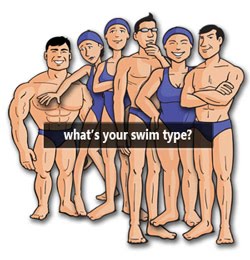
Swim Smooth are proud to announce a brand new way of looking at your swimming in a system called 'Swim Types'. Through our work with thousands of swimmers we've identified six distinct styles, or types, of freestyle stroke. Take a look at our new microsite and discover your type:

www.swimtypes.com
picture of swim types together
After identifying your Swim Type we then provide you with a straightforward process to follow to improve your efficiency and speed through the water. The Swim Type system doesn't replace conventional swim coaching, it complements it by providing you with additional insight into how you swim and what's holding you back in the water.

Many people are frustrated with their swimming. If you have worked hard on your stroke but are no faster than when you started it's very likely you've worked on the wrong things for your individual gender, height, build, stroke style and personality. The Swim Types system addresses this with a much more individual approach to stroke correction.

Also, many swimmers are confused and are thinking about too many things when they swim. The Swim Type approach cuts through that clutter, getting you focused solely on what you need to do for your individual stroke, allowing you to forget everything else.

Discover your Swim Type on Swim Smooth's new microsite: www.swimtypes.com

A request from us: If the one-size-fits-all approach hasn't improved your swimming, or has left you on a plateau, then please spread the word that there is a better way. Everyone is capable of swimming quickly and efficiently with an individual approach and style. Recognise your individuality and you too can make rapid progress with your swimming.

Swim Smooth!
Share:

What's Your Ape Index?

Here's something interesting on our current theme of individuality in swimming:

Climbers call the difference between your arm length and your height your 'Ape Index'. The difference is normally expressed in inches. So if your arm span is three inches wider than your height, then that gives you an ape index of +3. If your arm span is 2 inches smaller than your height, that gives an ape index of -2.

It's very easy to quickly find your ape index, just stretch up against a wall or post and find your arm span, then keeping your top finger in place, stand up and compare it to your height. You don't have to be too precise with this, you can look at the difference and estimate it in inches:


We can see there that Paul has an Ape Index of +3.

But what's this got to do with swimming? Well if you have short arms for your height (an ape index of zero or less) it's very unlikely you will be able to make a long stroke work for you. Swimmers with short arms will become slower and less efficient by trying to match the strokes per length of long-armed swimmers.

If you have shorter arms don't despair, you are capable of swimming at a higher stroke rate than other swimmers without fighting the water. A shorter stroke with a faster turn-over is your route to swimming speed and efficiency. Copying the style of elite swimmers (who nearly all have long arms) really won't help much.

You might like the analogy with bike crank length. Cyclists with shorter femurs tend to favour a shorter crank length that allows them to turn their legs over faster.

Ape Index is just one of the many physical and psychological attributes that construct your swimming individuality. If you've found that following a particular piece of swimming advice hasn't improved your speed (or even made you slower) then question if this was good advice for your stroke. In swimming always remember: one size doesn't fit all!

Swim Smooth!

PS. If you have an ape index greater than +7 or less than -4 inches then we'd love to hear about your experiences of swimming and the stroke style that works for you. Send us a quick email to: feedback@swimsmooth.com
Share:

Are You A Swinger?

Do you know the type of swimmer in the fast lane of your squad with the not so pretty but very effective stroke? The guy or girl who breaks all the 'rules' of swimming. They have a short stroke and a fast turnover, they can appear to fight the water and yet they swim very quickly indeed - much quicker than many of the middle lane swimmers trying to glide along. Somehow they seem to keep this up for longer and go further - without complaint - than much more stylish swimmers! How can this be?

We call this type of swimmer a 'Swinger' - because fundamental to their stroke is less body roll than someone with a classical long smooth stroke. This means their arms have to swing more around the side rather than over the top:


Other characteristics of a classic Swinger are:

- A high stroke rate with lots of rhythm
- No deadspots or pauses
- A slightly rushed catch, often hindered by a thumb first entry
- A high head position looking forwards
- In unrefined form they can be quite asymmetrical (lopsided)
- A tendency to cross over at the front of their stroke
- Minimal leg kick - the legs often seem to just trail behind being towed along
- Likes to get on with it and swim fast all the time
- Goes very well in open water
- Often has an outgoing, easygoing, personality

Important: don't confuse Swingers with some of the guys and girls who share many of the same 'flaws' in their stroke but are much slower and less proficient. This is a very different type of swimmer.

The fascinating thing about Swingers is how amazingly fast they can become. Many of the world's best open water swimmers have a refined version of this stroke and so do some of the best pool swimmers. The vast majority of pro-triathletes are Swingers too (though sometimes not that refined!).

Swingers have found a natural, organic way of swimming that works for them - it's rare that they were taught or coached to swim that way. To become quicker, a Swinger shouldn't lengthen out and add glide to their stroke as that would be throwing away their fundamental strength - the rhythm and momentum in their technique. By gliding they would end up being less efficient and slower. Instead, the unrefined Swinger should work on improving their alignment to remove that crossover and set themselves up for a better catch and pull. Taking a fraction longer over the catch - and not rushing through it - will improve their hold on the water. They might also like to formalise their kick a little into a more rhythmic, defined, two-beat action.

A New Project From Us

At Swim Smooth we believe that everyone is different and when we swim we are different again. Here in Perth we've been busy beavering away on a new project to explain your individuality. This project explains why some swimmers respond to slowing down and lengthening out their strokes whilst for others that's entirely the wrong thing to do. It shows you why some swimmers are quicker in a wetsuit while others are slower - and how to fix that.

In every instance it shows you a clear pathway to improve your individual swimming, whether you're struggling to swim a lap or you already swim like Mr Smooth. And, of course, it explains how Swingers do what they do and whether adopting that style - or should we say throwing your keys in that pot - would be right for you.

Don't worry, in true Swim Smooth style we've worked hard to make things easy to understand and simple to act on. We're very excited about how it will help your swimming and can't wait to properly launch the system to you very soon. Damn, we feel quite emotional!

Swim Smooth!
Share:

Swimming Faster And Straighter In Open Water

We're going to follow on this week from last week's interesting data about just how far off course it is possible to swim in open water race.

We know from all your emails, posts and forum questions how fascinating you found that article. This week we're going to give you some pointers on how to swim much faster in open water - but first let's look at some GPS data from another swimmer who raced the Busselton Half Ironman. As you can see, they managed a much straighter swim than Dan - 330m shorter in fact, over a 1900m straight-line swim :


For this swimmer, 330m equates to approximately five minutes!

TIPS TO SWIM FASTER AND STRAIGHTER IN OPEN WATER

1) Learn To Put Your Wetsuit On Properly

Sounds simple but most swimmers don't put on their wetsuit properly. Watch this demonstration video of how to do it by shoe-horning plenty of material up the limbs towards the body and shoulders. This dramatically reduces the restriction around the shoulders, costing you less effort and freeing up your stroke.

2) Overcome Anxiety

Anxiety in open water is normally caused by external factors in the watery environment around you - depth, cold, not being able to see far (if at all!) and having other swimmers in close proximity to you. All of these factors lead to the same physical response - holding your breath.

Holding your breath immediately increases the anxiety further, things start to feel out of control and you may even feel a sense of panic. For many triathletes, their race is off to a very bad start, or even finishes there and then.

Focus on internal factors that you can control, the most important of which is remembering to exhale into the water. Check this throughout your next open water race, particularly if you're feeling anxious or panicky out there.

3) Swim Straight

To swim straight you need a symmetrical stroke and the natural way to become symmetrical is with bilateral breathing in training. Quite possibly this is not what you wanted to hear if you struggle to breathe bilaterally!

The straighter you can swim naturally, the less you will veer off course and the less often you will have to sight. That's good because every time you sight it requires an increase in effort and a loss of efficiency.

Learn how to conquer bilateral breathing here: http://www.swimsmooth.com/bilateral.html

4) Master The Art Of Sighting

You may think that sighting is as simple as lifting your head to look forward and see where you are going but it needs a great deal of skill to do it well. The world's best triathletes and open water swimmers can sight without disrupting the rhythm of their stroke or their body position in the water, and this is key.

Here's the correct technique: time your sighting to happen just before you're going to take a breath. Lift your eyes out of the water by pressing down lightly on the water with your lead arm (in this example your right arm). Only lift up enough to get your eyes just out of the water. Your left arm will have now started recovering over the water, as it does so, turn your head to the right with your body to breathe. As you do so, let your head drop down in the water to a normal breathing position. See a video clip of Ceinwen Williams using this technique to great effect here.

You can of course master this technique in the pool. Make it more race-realistic by practising in your quality swim sets when your heart rate and effort levels are high!

5) Draft Better

Drafting is swimming directly behind, or to the side and slightly behind, another swimmer. Studies show this saves 18 to 25% of the energy expenditure of swimming. In a race it makes perfect sense to capitalise on this source of free speed.

When it comes to drafting, once again practise makes perfect. If you want to become good at drafting then you need to devote training time to it. Look at drafting either as a way of swimming faster than normal by sitting on the toes of someone faster than yourself, or, by swimming behind someone of the same speed as you, leaving yourself super-fresh for the bike and run.

Get together with some training buddies and take turns leading and drafting behind and to the side. Again, harder swims are a great way to simulate race stresses. In our squad sessions in Perth we regularly organise swimmers into groups of three or four of similar speed. Rotating the group every 100m or so, it's the lead swimmer's job to try and drop the guys behind - great for your skill development and great fun too! (of course, if you hire some lanes you can have even more fun)

These points are a summary of our full article: 5 Tips To Swim Better In Triathlon And Open Water

Swim Smooth!
Share:

Announcing SS UK Clinics June 2010 & Coaches Education Course

UK Clinic Series June 2010

Swim Smooth are excited to announce nine UK Clinics in Birmingham, York, West Lothian, Bolton, Windsor and Maidenhead in June. If you are a swimmer or triathlete looking to improve your speed and efficiency in the water, book your place now: www.swimsmooth.com/clinics

** Our previous clinic series in January filled up in 48 hours - please don't hesitate to book your place! **

A Swim Smooth clinic is a full day of focused development of your individual stroke technique with Swim Smooth coaches Paul Newsome and Adam Young.

Each clinic includes:

- Detailed video footage of your stroke above and below the water which you will take away with you on DVD.

- A full analysis of your stroke by Head Coach Paul Newsome. You'll come away with a clear understanding of what's currently holding you back and exactly what you need to do to improve your swimming speed and efficiency.

- Unique interactive classroom sessions that explain the fundamentals of the freestyle stroke, exactly why common problems occur and how to fix them. We'll cross reference this to your own stroke and in doing so explain how to adapt your individual technique for best performance in open water.

- How to develop a swimming program to suit your needs and how to get the most out of your pool time.

- Two practical swimming sessions focusing on developing your stroke. Paul and Adam will show you exactly how to fix the problem areas of your technique. You'll be given all the drills, methods and visualisations you need specific to your individual stroke, which you'll practice under our guidance.

- A mini squad session showing you how to implement our unique technique methods into a 'normal' training session.

The clinics are suitable for any ability of swimmer who can swim 200m of freestyle continuously, from beginner up to advanced level. Each clinic is strictly limited to twelve swimmers to ensure you get plenty of individual attention to your stroke needs.

Demand is expected to be very high - please don't delay in booking your place: www.swimsmooth.com/clinics


Swim Smooth Coach Education Course

Swim Smooth are also announcing our first Coach Education Course outside of Australia in Birmingham UK on the 4th to 6th June. This initiative follows a substantial request from coaches interested in our methods and practises. The course is an intense program for ambitious swimming and triathlon coaches of any experience or level and will teach all of Swim Smooth's coaching methods including advanced stroke correction. The three day course will be delivered to twelve selected coaches by Swim Smooth's Paul Newsome and Adam Young.

For full details and to apply visit: www.swimsmooth.com/coacheseducation.html


We very much hope to meet you in person in June.

Cheers,

Swim Smooth!
Share:

What's The Easiest Way To Take Ten Minutes Out Of Your Swim Split?

Here's some fascinating GPS data from one of our Perth squad members, Daniel Tarborsky. Dan raced with his Garmin GPS under his swim cap for three of his major races this season just gone, recording the exact path he took. Let's see how he got on:

Busselton Half Ironman, May 2010:


Close-up:


Statistics:
  • Distance travelled from Garmin (inc run in & out): 2.33km
  • Straight line distance (inc run in & out): 1.98km
  • Distance extra swam: 0.35km
  • Percentage extra swam: 18%
  • Calculated time lost from swimming extra distance: 10 minutes exactly!

Port MacQuarie Ironman Australia, April 2010:


Statistics:
  • Distance travelled from Garmin (inc run in & out): 4.13km
  • Straight line distance (inc run in & out): 3.84km
  • Distance extra swam: 0.29km
  • Percentage extra swam: 8%

Hillary's Sprint Triathlon, April 2010:


Close-up:


Statistics:
  • Distance travelled from Garmin (inc run in & out): 1.02km
  • Straight line distance (inc run in & out): 0.82km
  • Distance extra swam: 0.20km
  • Percentage extra swam: 24%

Wow - thanks to Dan's data, you can clearly see the huge scope for losing time from poor navigation in open water. Whilst some of the extra distance measured by the GPS may be due to swell motion, it's clear that most of it is from straying off course - we've seen other GPS data at the same races showing much better navigation.

Food for thought isn't it? If we wrote a blog post about an easy way to improve your stroke technique to take ten minutes out of your swim split you'd hang off our every word! And yet, most triathletes never develop or practice their navigation and sighting skills.

A swimmer can measure their 100m time or count their strokes per length in the pool and so spends a lot of training focus improving these metrics - "what gets measured gets done". Until now we've not been able to accurately track how a swimmer travels in open water - and this probably explains the lack of enthusiasm about developing open water skills.

We're now rapidly approaching the northern hemisphere race season. If you are looking to get the best out of yourself in the water we strongly recommend you devote one of your weekly swims towards open water skills. The ideal way to do this is to train in open water in a group, however you can do a pretty good job working on your sighting and drafting techniques in the pool too.

A big thank you from us to Dan for being a great sport and allowing us to share his navigation skills with the world!

Swim Smooth!
Share:

Interview With Wetronome User: Olympic Coach Ben Titley

We're very pleased to bring you a bit of insight from the elite swimming world this week. Our interview below is with British Olympic Swimming Coach Ben Titley. We quizzed him about his philosophies, training methods, how he uses his Wetronomes and if he had any tips for more modest level swimmers:

SS: Hi Ben, welcome to Swim Smooth, we're very glad you could join us today.

BT: My pleasure, thanks for having me on!

SS: Ben, your coaching credentials are very impressive for such a young coach - you've coached many of Britain's finest swimmers. Could you give us a brief résumé?

BT: Sure! My swimmers have included: Liam Tancock (World Champion, WR Holder, C'wealth Champion, European Medallist), James Gibson (World, C'wealth & European Champion, European Record Holder), Melanie Marshall (World, European & C'wealth Medallist, European Record Holder), Francesca Halsall (World, European & C'wealth Medallist, European Record Holder), Elizabeth Simmonds (World, European Medallist, European Record Holder), Caitlin McClatchey (World, European Medallist, Double C'wealth Champion), Therese Alshammar (World Record Holder, World Champion), Ross Brett (World, European, C'wealth Medallist), Kate Haywood (World, European and C'wealth Medallist), Julia Beckett (World, European, C'wealth Medallist), Ross Davenport (World, European Medallist, C'wealth Champion), Matt Bowe (European & C'wealth Medallist), Sara Hopkins (European Medallist), Karen Lee (Olympian), Emma Robinson (Olympian)

In total have coached 11 Olympians and a total of over 300 national records broken.

Coached on 2001, 2003, 2005, 2007, 2009 World LC Championships
Coached on 1998, 2002, 2006 (& 2010) C'wealth games
Coached on 2004 & 2008 Olympic Games (Head Coach in 2008)
Coached on 1999, 2001, 2003, 2005 World University Games


SS: Ben, that's hugely impressive - how do you find time to sleep?!

BT: Thats easy, I get pretty tired!

SS: Being part of the High Performance Centre at the Loughborough University you have access to some of the world's finest coaching and sports science support. Can you tell us a little bit about your application of sports science and how you feel this helps your swimmers work towards their goals?

BT: We have a great support system here with Physio, video analysis, nutrition, strength & conditioning etc. I like to know a bit about them all as I feel it is important for me to be involved in a holistic approach to improving my athletes. However, I am smart enough to know that we have people who know way more than me in these areas and so I usually go with what they say! I would also say that i am far more a believer in 'practical or thinking' sports science. I put my faith far more in people's current and future views than I do of 'book' sports science...we need to be forward thinking.

SS: Can you tell us one thing that you do with your coaching to keep the spark, interest and fun there for you and your swimmers? Your swimmers are doing a huge volume of weekly hours so presumably you do something to spice things up and keep it entertaining?

BT: Everything is performance focussed and as specific to the individual as possible, we don't do lots of meters if it doesn't suit the athlete and we use quite a lot of kit to keep challenging the athlete's engagement and thought processes, its real important they think!

SS: You seem to really enjoy innovation within coaching and admire new ideas and ways of thinking inspired by other coaches around the world. Can you give us a sneaky-peek into some of the innovative techniques you apply within your program on a regular basis?

BT: No big secrets... treat the athlete as an individual, be specific with regards to performance, and make them think for themselves.

SS: (Aside) Last year British Swimming purchased 60 Wetronomes for their elite swim program, as did Australian Swimming. These little guys help a swimmer work on developing their stroke rates by setting an audible beep that the swimmer can follow. The coach or swimmer can then change this rate as they see fit and depending upon their objectives.

Ben, can you tell us a little bit about the work you have done with your elite swimmers with respect to their stroke rates? How important is it as a coach for you to monitor and develop this aspect of their swimming?

BT: We use it for Liam Tancock with regard to targeting specific points of his race, i.e. rate of 57 (114 SPM) for the 1st 25m, rate of 54 (108 SPM) for the 2nd 50m. We also use it for reduced rate work, focussing on DPS (Distance Per Stroke) at sub maximal rates, kind of like they do in rowing.

SS: And how well tuned do your athletes feel to their stroke rate and how this affects their economy?

BT: The athletes get very good at 'feeling' their stroke rates and get a good idea of where a comfortable rate is for them. About 9 months ago I did a set with Francesca Halsall where we changed the rate on a set of pace work... she felt most comfortable at speed with a rate of 57 (114 SPM), this correlated with what her target first 25m section of her 100 free is.

SS: What role does 'Distance Per Stroke' play within an elite swim program?

BT: Distance per stroke is super important. Most of my athletes tend to be higher rating athletes, so it is super important that we keep a focus on the length also, its a balancing act.

SS: Do you find any noticeable difference between stroke rates in a short course (SC) 25m pool compared to in a 50m pool for the same swimmer, doing the same stroke, over the same distance?

BT: Swimmers would usually be able to maintain a higher stroke rate SC as the added speed off the walls allows them to keep a bit more momentum, also they probably swim in reality quite a bit less!

SS: How about the open water? Care to share any thoughts and ideas on how working with stroke rate may help our triathlete and open water swimming community out there?

BT: Not really my speciality but I would say that finding a comfortable tempo which you can sustain would be a very economical way of swimming for longer distances. I would think it is probably one of the main areas these athletes should work on.

SS: Have you had a chance to check out the Wetronome's new lap interval function yet which is great for accurate pace judgement for distance swimmers in particular? (Ed: readers can learn more about the lap interval mode on our Wetronome page). Have any of your swimmers found they typically set-off too fast in harder sets and time trials like our swimmers do?

BT: This is something we constantly work on, and I'm sure for athletes training longer distances this would be very useful. For me personally my athletes need to be a little bit more precise (i.e. 25.6 sec then 27.2 sec) so we haven't really used this function too much as of yet but I'm sure in the future we will for longer, sub maximal repeats.

SS: Can you tell us a little bit about your ideas on developing individuals from a stroke technique perspective? How important do you believe it to be to work on a swimmer's strengths without necessarily feeling like you have to mould them to a norm?

BT: All I can say is treat athletes as individuals. Always have 'performance' as the first thought in your mind when training or coaching and know that it is normal for people to not be 'normal'! What works for one athlete, or what motivates a certain athlete, could be the complete opposite for the next one through your door! Hold on to your principles but understand the world is changing before our eyes.

SS: Ben, thanks so much for your time - best of luck with everything, especially the Commonwealth Games and then London 2012. I'm sure all our UK readers will be eagerly watching the progress of your swimmers, especially in London!

BT: No problem, thanks again for having me on and good luck to all those aquatic athletes out there.

--- Interview Ends ---

You can find out more about the Wetronome here: www.swimsmooth.com/wetronome

Swim Smooth!
Share:

Are You Kicktastic?

When they swim freestyle, everyone has to kick to some extent to keep their body position high in the water. But generally, as distance swimmers and triathletes, we're looking to minimise the effort we put into our kick.
The propulsion from leg kick is very small; even if you have a fantastic leg kick technique it's unlikely to be more than ten percent of your overall propulsion. It's much more efficient to spend that energy on arm propulsion instead - you'll move much faster through the water as a result.


Many swimmers - we call then 'Kicktastics' - are very kick-dominant in their stroke. Subconsciously they are relying on their kick for propulsion and swim with a continuous, powerful leg kick. Rather than the arm stroke leading the kick timing, with Kicktastics it's the other way around. Their kick very much comes first!

How to spot one: Other than the very strong kick, they often have a slight pause or slowing in their arm movement as the hands enter into the water at the front of the stroke - this is their arm timing falling in line with the kick timing.

If you feel you are a little Kicktastic, here's a very simple exercise to help you take that leap of faith from lower body to upper body propulsion:

Using a pull buoy between your legs, perform 15m of the Scull #1 drill from our DVD Boxset. This is a simple but very effective sculling exercise at the front of your stroke, tuning into a light pressure on the palm of the hands: 'feeling the water'. Then after 15m, enter into full stroke swimming - still with the pull buoy - feeling that pressure on the palms of your hands and focusing on pressing it backwards to the wall behind you. After approx 20m of swimming like this, part your legs slightly and release the pull buoy (be wary of any other swimmers in the lane!). Carry on swimming as you were when you had the pull buoy - focusing on that light pressure on the palms of your hands. Of course, you will need to kick slightly without the pull buoy but keep the focus on your arm stroke - giving you the feel of arm led propulsion.

Relevant link: Our webpage all about kicking.

Swim Smooth!
Share:

A Light Focus / Brad's Run Across America

When you're trying to improve your freestyle stroke it's natural to concentrate really hard on what you are doing. Sometimes heavy concentration isn't the best way to improve. It tends to make your movements robotic and often shuts out your natural feel for the water.

Here's something to try: When you swim, experiment a little and try a 'light focus' instead. Treat your swimming laps like a game and relax as if it's for fun and it doesn't really matter*. Take a few slow deep breaths before you start a lap, notice the pool environment around you and just enjoy being there. Start swimming at a steady pace as if on auto pilot and lightly monitor what you are doing as if out of curiosity.

Introduce a small change or adjustment to your stroke and see how it feels, does it feel better or worse? Be lightly aware of the knock on effect this has on other parts of your stroke or timing. Very often you’ll discover something about your stroke which will really help your swimming.

When we watch elite swimmers they look very fluid and relaxed in the water. Remember, it's not just their stroke that is relaxed and unforced but their minds too.

*actually, swimming is fun and it doesn't really matter!
----------

Also this month, a special mention for a good friend of Swim Smooth, Brad Hosking, who's undertaking some huge feats of endurance over the next few months to raise money for the Princess Margaret Hospital here in Perth. A local fire-fighter, Brad's running the entire half marathon at next weekend's Busselton Half Ironman in fire-fighting gear, including face mask. Incidentally the mask will be fed with an air mixture, not pure oxygen as this would be considered performance enhancing!


Then, commencing on the 16th August, Brad's joining up with 18 other Aussie fire-fighters to complete an epic 26 day, 7392km charity run across America. To be joined by countless American firefighters, the team will run from Los Angeles, through Las Vega, Arizona, Albuquerque, Oklahoma, Houston, Memphis, Charlottesville, Washington, Balimore and Pennyslvania before arriving at Ground Zero on September 11th. The run is being held in memory of the emergency workers who lost their lives on September 11th 2001 and to raise awareness of the role that emergency workers play within our socities during events such as the Victorian Fires of 2009 and the Californian Wildfires of 2008.

You can find out more about the events and Brad's fund-raising here. Please give generously to his Everyday Hero donation page.

Swim Smooth!
Share:

Interview And Video Analysis: Pro Triathlete Scott Neyedli

This week on Feel For The Water we have an interview with Pro Triathlete Scott Neyedli and an accompanying video analysis of his stroke. A couple of weeks ago Scott swam 44:35 at a slightly tide assisted Ironman Australia, we're sure you'll find the interview and video analysis a fascinating insight into swimming at the very front of the pack.

Link: See our video analysis of Scott's stroke here.

-Interview Begins-

SS: Hi Scott, welcome to the Swim Smooth Blog! Thanks for dropping by to share with us some details of your Ironman training.

SN: Not at all, nice to be here, thank you for inviting me to your Swim Smooth video analysis last month.

SS: Let's start by talking about Ironman Australia last Sunday (March 28th), you had a cracking race finishing a very close second overall behind Patrick Vernay. You must be pretty pleased with your race?

SN: Yes I was very happy with another podium finish, I pushed for my second Ironman win but the wheels fell off in the latter stages of the marathon. Patrick is a great champion here in Australia, hopefully I can reverse this when I come to race here again.

SS: I hear that you got within 20 seconds of catching Patrick on the run? That must have been a tantalising experience? Care to share any thoughts about how that felt and have you ever been in a similar situation before?  I know that many of our readers will often be fighting it out for Kona slots and will be interested in your answer.

scott1
SN: I think everybody racing Ironman has their own inner battles throughout the day. It's the same at elite level as it is for those looking for a Kona slot or wanting a finisher's medal. We all have bad patches at some point and it's just a case of managing each scenario as it occurs.

It's the second time I've raced Patrick and it was a different experience compared to Busselton last December. In Busso I wasn't able to reel him in close until the last 10K of the marathon before he pulled away.

This time around was quite different. The gap during the marathon was fluctuating throughout, ranging between 20 and 80 seconds where we both seemed to have good spells and bad spells. I twice had gastric stomach issues in the first 20km but I was still running well, he then had some cramp issues mid way then it was my turn when we came to the last miles on my last trip up the hills section. The race for the win got away from me which was a little heart breaking and I lost a few mins in the final kms, it was just a case of survival, getting to the finish line and holding second place. I'm still proud of how I raced.

SS: So let's talk about the swim then at Ironman Australia. We were lucky enough to catch up with you here in Perth the week before the event and film your stroke from a variety of angles in one of the awesome outdoor 50m pools at Challenge Stadium. I have to say that you were looking really impressive during the filming and having not seen you swim before I was very impressed with your form in the water - you certainly looked set for a great race at IMOZ which proved to be the case when you produced the second fastest time of the day in 44 mins and 35 seconds for the 3.8K distance. For those of our readers out there who are geeky like me, they'll know that this equates to 38 consecutive 100m splits in under 70 seconds. How did you feel out there?

SN: Overall yes I'm very pleased with the swim performance and a PB! The course could be short but you never know I'll take it with grace.

I was getting good tell-tale signs that my swim was sharpening up in my final sessions and I thought a fast time was possible. The swim was tide assisted downstream plus there was an extra 400m point to point at the start (with the tide behind) before the two loop swim course began.

A lot of the credit has to go to Adrian Cominotto who lead me through most of the swim and was first out the water, had I known it was going to be a swim course record I may of contested the swim exit but my mind was more focussed on getting a good T2 before beginning the bike leg.

Having said that, the only thing I was disappointed was missing the chance of a clean start. A car horn set off the main pack and I didn't leave until 15-20 seconds later having realised they weren't going to call them back for a restart. I stayed focused but it cost me the chance of a break away as I had to work my through the pack that had jumped ahead of me in the first 400m. Once I got to the front I led the race briefly with Paul Ambrose in the early stages of the first loop before Adrian came through to lead.

SS: And did you think about anything specifically with respect to your technique whilst you were completing the swim? Did you, for example, make use of any drafting opportunities in the swim? We're always reminding our swimmers that you can save 18-25% of your energy expenditure by mastering this technique and yet so few triathletes make enough time in their training to practice this. What are your thoughts on that?

SN: Exactly that. Because I had to work extra hard in the first 4-500 meters from the premature horn, I tried to do this strategically and smart by working in and out of swimmers drafts and also the small main group ahead of me.

Once I was out of trouble and at the front of the swim I was quite happy and maybe a little relieved when Adrian came to the front – as I was a little concerned of the amount of energy I'd used up to get up to the lead canoe and needed a break to recover.

I slipped onto Adrian's feet just concentrating on settling my breathing down and lengthening my swim strokes to feel easier and trying not to touch his feet on the draft. The pace settled down but still there was changes of pace to adapt to - normally around the turn buoys and then in the last 3-400m as we headed back into the beach for T2.

SS: How hard would you say you set off at the start of the swim in an event lasting (for you) just under eight and a half hours? Presumably you manage and control your pace well in the first 400m? Any advice for our readers on this?

SN: No, not at all - actually the first few hundred metres is maybe the most explosive of the race (for me).

My first objective is to get clear space from the competitors around me so I don't get pinned and then to find open clear water as I find it easier to swim through that than the broken water carnage further back before the swim packs take shape (although not in this case from the start described earlier). Normally the swim start presents the best opportunity to breakaway at the front end of the swim before settling into my pace and hopefully not towing too many other swimmers. If there's a better swimmer than me I more than happy to take the tow as I know my buoy spotting isn't too hot when it comes to swimming the best line.

scott2
SS: OK, so just taking a quick step back then to your past. In 2007 you won Ironman UK and smashed the field during this event. Prior to this though you are relative newcomer to the sport, having taken it up as a way of working off the pounds from your previous job in the oil and gas industry in Aberdeen, Scotland. What is your background as a youngster involved in sport, particularly your swimming history?

SN: I enjoyed most school team sports such as football, then rugby through primary and secondary school but I turned my focus to club swimming at about the age of 14 or 15.

I first entered the Aberdeen Dolphin club squads at 10 or 11 which was a little later than other kids my age and I wasn't really competitive until my early teens. I was initially a backstroker then laterally focused on my medley in my late teens.

From about the age of 15 or 16 I would medal regularly at district level but at best A or B final at the Scottish Nationals. I wasn't a talented swimmer but I was a good worker and would race better over middle and long distance swims.

My PB's:
Backstroke 100m: 62.8; 200m: 2:15
Individual Medley 100m: 63; 200m SC: 2:15; 400m 4:46
Freestyle 100m: 56 LC; 200m SC: 2:01; 400m: 4:15; 1500m: 17:20 or 40

I stopped swimming in my last year of University at 21 and had a break from sport due to work commitments thereafter and got into triathlon and swimming again at 26 - I also dabbled a bit with masters swimming and also a few open water races but triathlon gave me the bug again.

SS: So, our readers can read a lot more about you if they wish at www.scottneyedli.com - you've got some great videos up there and a super-regular Blog with lots of details of what you're up to. Care to tell us a little bit about some of your sponsors Scott and how they help you achieve your goals?

SN: My team contract wasn't extended last December so it left me in precarious position of trying to find a new main sponsor (which I'm still searching) and to source new equipment sponsors over the Christmas period. Triathlon is so diverse that without great sponsor support, it wouldn't be possible to be doing what I'm doing.

All my supporters can be viewed on my website for further details. I'm proud to be supported by Macintosh Plant Hire (Aberdeenshire) and Xosize (Melbourne) who helped with my travel to my latest Ironman race.

Aberdeen Sports therapy has supported me throughout my career and have been very instrumental in the remedial side of body maintenance, injury prevention and sports performance when I began training full time.

BlueSeventy has supported me for three seasons with their top of the range Helix Wetsuits and PZ3 Fastskins that keeps me at the top end of swim ware evolution.

Most recently through UK Multisport Distribution, I have signed bike, clothing apparel, helmet and eye protection sponsorships with Blue Competition cycles, Fusion and Ekoi respectively. Through Chocolate Distribution I have wheel support with Prima Rolf.

scott2
Both through wind tunnel testing, power meter tools (I have supported by SRM and Computrainer), nutrition testing and the Swim Smooth video analysis it gives me the opportunity to tweak technique and positions that optimise my performances as best as possible.

At elite level you're always looking for a half percent here and there as this all equates to improved time or more energy conservation come race day. Working with a great team of like minded sponsors all contribute my results.

SS: OK, back to your swimming technique then. When you were being filmed up at Challenge Stadium one of the things that was immediately apparent about your stroke was a lack of glide or dead-spots at the front of your stroke... your rhythm and timing was spot on and the flow within your stroke was excellent. You seemed to achieve this when swimming at race pace with a relatively high stroke rate of approx 85 strokes per minute. Have you ever specifically trained this aspect of your  stroke?

SN: Stroke rate (counting) isn't something I personally focus on (but prior club coaches did) but probably translates to the changes of pace (or varying of turnaround time) I add within many of the main sets I write for myself.

SS: What does a typical swim training week look like for you, both with respect to volume and intensity?

SN: Typically I swim train 4 times a week (2 sessions endurance based, 2 sessions shorter distance base at or above threshold) + 1 recovery swim where I work more on drills and technique.

My sessions range between 3-5k with warmup, drills, main set and cool down.

It depends on the facilities or environment where I'm living but if a squad session fits my overall training plan I try to do at least two sessions with a swim squad otherwise the longer distance sessions I train by myself.

SS: Do you have a favourite swim session that you care to share with us targeted specifically at Ironman distance events?

SN: I vary the speed and recovery on each 400m - its good race simulation being in and out of the comfort zone and adapting to a change of speed and effort:
e.g. 7x 400m: 400 on 6 mins, 2x 200 on 2:50, 4x 100 on 1:35, 8x 50 on 40, 4x 100 on 1:35, 2x 200 on 2:50, 400 on 6mins

SS: How much open water swim practice do you typically get in during your training? Do you see this as being important to a triathlete's preparation?

SN: I don't personally do any open water practice until race week. I'm at a competent level of open water experience that I'm happy to have 1-2 sessions on the swim course for familiarisation before I race.

Having said that for anyone that's new to open water swimming and triathlon I would recommend some sessions to firstly familiarise themselves swimming close to other people, swimming in different water temperatures and getting use to the benefits of a wetsuit (different catch position) and also how water conditions can vary i.e. current, swell or chop that race courses can present.

SS: Many triathletes like to know that they can swim the complete 3.8km distance before the event. You are obviously a very accomplished swimmer in your own right - how often do you typically do a continuous 3.8km swim in training would you say?

SN: I haven't – my overall training volumes add up to 5k so I know I can swim the distance.

I did my first T30 (a thirty minute continuous time-trial) 2 or 3 weeks before Port Macquarie (ed: Ironman Australia) and recorded 2.4K which is the longest continuous swim I've done in training. Outside that, the longest single distance would be 1500m in one of my other favoured swim sets - the Hungarian (pyramid) 1500: 50,100,200,400,800,1500,800,400,200,100,50

SS: Scott, thanks for taking the time to do this interview. You're a busy guy with a huge amount of talent and we really wish you the very best of luck in the future with your triathlon endeavours. Any last morsels of advice for our readers out there?

SN: Train smart, eat smart, rest smart and be the best you can be!

SS: Thanks Scott!

-Interview Ends-

Swim Smooth!
Share:

Cheesy Friday - The Results!

Thanks to everyone who contributed their literary gems to our Cheesy Friday request for motivational slogans. The response has been huge and it's taken us a while to wade through and select our favourites. We're sorry if yours didn't make the final cut but rest assured we've read and enjoyed every one. Unfortunately they weren't all suitable for publication on this family friendly blog! Here's our picks:

"You are braver than you believe, stronger than you seem and smarter than you think." Christopher Robin to Pooh

"Today I do what others will not, so tomorrow I do what others cannot."

"See your future - Be your future"

"Of course it's hard. It's supposed to be hard. If it wasn't hard, everyone would do it. The hard... is what makes it great." or simply "Nothing great is easy."

"Be not afraid of going slowly; be afraid only of standing still."

"Luck: when opportunity meets preparation and hard work."

"Some days you're the pigeon, some days you're the statue." (Ricky Gervais)

"The only time success comes before work is in a dictionary."

"Only the mediocre are always at their best."

"Throw your heart off the blocks and the rest will follow."

"Whether you believe you can or you can’t, you are always right." (Henry Ford)

"A pessimist sees the difficulty in every opportunity; an optimist sees the opportunity in every difficulty." (Winston Churchill)

"Life begins at the edge of your comfort zone."

"The best way to eat the elephant standing in your path is to cut it up into little pieces." (African Proverb)

"Get off the 'ing wall and swim!" (The late great Doug Stern)

"Pain is just weakness leaving the body."

"More is sometimes better, better always is."

"When you're going through Hell, keep going!" - Winston Churchill

"The hardest piece of fitness equipment is the front door."

"SHARK!!!!"

We hope you had a good giggle from reading these (and maybe even some inspiration too!).

Cheers,

Swim Smooth!

A big thanks to everyone who contributed to this list, including: Daniel Benson, Judi Clemie, Kristie Concepcion, Brett Rickenbach, Nick Crane, Joshua Needleman, David Roberts, Steve Richards, Glen, Sally Scaffidi, Graham Marcussen, Hilton Selvey, Nick Barnes, Michael Dickens, Sandy Burt, Julie Chasin, Steve Poulton, Richard Buckingham, Lara McIntyre, Graham Crocker, Dean Benson, Cesar Augusto López Joya, Paul Maggs, Steve Jenner, Rachel G, Jeff Mannion, Susan Sapin, Steve Braithwaite, Redmond Burke, Mary Wall, Miroslava Doncheva, Lauro Cantu, Nathan Jolly, Ty Haeber, Kevin Donohue, Holly Willenbrecht, Joe Mulrooney, Bruno Roels, Alan Wiederhold, Doru Sandor, James Carrigan, Greg Elwell, Nicholas Simpson, Jason Melby, Matthew Conrad-Jones, Samo Michel, Christian Wilson, Fiona Ford, Erica, Francis, Lisa Hartman, Markus Lehtonen, Nick Walshe, Bruce Matthews, Michael Gudgeon, Darren Osborne, Jim Mcfadyen, Rudolf Megert, Johanna Kemplay-Hill, Michael Byrd, Roberto Bosch, Prateek Sharma, Clare Ryan, Steve Lumley, Rachel Slack, Sean Reddell, Arthur Veldre, Julie Kerr, Paul Gill, Phil Crowder, Erwin, Adam Titley, Dan Hegner, Janet Fitzell, JP Kanekom, Alison, Tom Masterman, Nancy LaTour, Randy Knutson, Keith Cox, Hamid Darif, Tom Barratt, Adam Herps, Magnus Riska, Abid Ejaz
Share:

Cheesy Friday

A little fun on the blog this week, we'd like you to tell us your favourite motivational slogans - the cheesier the better! As a coach on the pool deck it's often difficult to avoid applying a bit of cheese when you're trying to motivate a group or individual. My personal favourite is:

"If you always do what you've always done, you'll always get what you've always got!"

Here are some more below but what are your favourites?

"No-one ever excused his way to success"

"Damned if you do, bored if you don't"

"There's always free cheese in the mouse trap, but the mice there ain't happy"

"The only difference between a rut and a grave is their dimensions"

"Of course it's hard. It's supposed to be hard. If it wasn't hard, everyone would do it. The hard... is what makes it great"

To submit yours, simply reply to this email or send an email to blog@swimsmooth.com.

We'll collate your replies, pick the best ones and post them out on Monday to cheer you up on your return to work! Include your name if you'd like to be credited for your submission.

Cheers,

Paul Newsome
Swim Smooth!

By the way: We occasionally get asked about our spelling. Swim Smooth is an Anglo-Australian company so we use British English spellings, we hope you catch our gist!
Share:

Find Your Stroke Rate Sweet Spot

You may not know this but nearly everyone's freestyle stroke has 'sweet spots' in it at certain stroke rates (strokes per minute). These are strokes rates where your efficiency is higher, meaning you move more quickly though the water for the same effort. Even if you swim regularly with a Wetronome you may not realise where these sweet spots lie.

ramp
That's why we invented The Stroke Rate Ramp Test - a method of assessing the full spectrum of your stroke. With a little help from a coach or friend on the poolside you can run through the Ramp Test and find stroke rates where you swim more efficiently. These are points where your stroke technique clicks - even if it doesn't feel that way at first. For instance, you may normally swim at 55 strokes per minute but find that at 59 strokes per minute you swim faster for less effort. Train and race at these sweet spots to get the very best out of your swimming.

Read our full article on the test here: Stroke Rate Ramp Test

Or jump ahead and watch our demonstration video right way.
Even those who don't own a Wetronome will find this interesting to watch!

Swim Smooth!
Share:

Don't Forget To Breathe, Doctors Recommend It

Good breathing technique - particularly exhalation into the water - is at the heart and soul of good freestyle. But don't take our word for it, here's an email we received on Wednesday from a swimmer we've been advising in Atlanta, Georgia:


Dear Paul,

Last night I watched the sink down drill on your website repeatedly before leaving work, then I went home and watched your Swim Smooth DVD segment on breathing several times. Today I started my workout with the sink down drill and then several slow laps with breathe-bubble-bubble-breathe.

I forced myself to breath bilaterally and to constantly exhale in the water. I instantly noticed that I didn’t feel nearly as winded after the warm up as I usually do. I told myself to focus ONLY on breathing today and to let everything just take its course (sometimes I get wrapped up in over thinking my stroke – which, in its own way, is a form of under thinking). Today’s workout was challenging: we had several pull sets of increasing yardage with fast sets of 100 swim between them.

All I can say is, WOW! This morning, I had my best day in the water yet. I kept repeating "breathe-bubble-bubble-breathe" to myself throughout the swim (with only a couple of mental lapses) and on the longest of the pull sets (600 yards), I finished way ahead of where I would normally be versus my lane mates. A woman who swims in the lane beside me commented on my "blistering pace" this morning (a relative term, I know).

What amazed me was just how relaxed I was the entire time and my right shoulder didn’t hurt at all during the swim! Frankly, I hardly felt winded when the 600 pull was over. (The only time I struggled this morning was during a couple of fast 100s when my mind drifted a little and I started holding my breath again, which caused me to breathe to my default side.) When the workout was over, my first thought was, "that’s it?" When I got out of the water, I was not nearly as wiped out as I usually am after a swim.

Today was a HUGE psychological breakthrough for me (I was nervous on the way to the pool this morning about trying a new breathing exercise). I no longer feel like I am stuck and I got a glimpse of what relaxed swimming feels like. I feel that mastering my breathing first is the KEY that will allow me to patiently focus on other elements of my stroke that also need improvement. I will be diligent and persistent in working on my breathing as I can no doubt get better.

Paul, thanks for your interest, your thoughts, and for your inspiration! Today was a big step forward in my swimming and I feel like shouting it to the world, but since most won’t understand, I thought I’d at least drop you a note to express my excitement and sincere gratitude.

Cheers,

John


Sometimes the most simple things make the biggest difference to your swimming.

If you find breathing a challenge, feel puffed, head-achey or just tense when you swim then it's essential for you to develop your exhalation technique if you want to improve your swimming. For everyone else it's merely very important to do so!

Note 1: You can find the sink down exercise John's referring to at the bottom of this page: Breathing Exhalation. Exhaling into the water doesn't feel very natural at first and the sink-down exercise helps you get the feel of it.

Note 2: Bubble-Bubble-Breathe is a mantra to say to yourself whilst swimming. It helps co-ordinate breathing every three strokes (bilateral breathing) and exhalation into the water. When you breathe every three strokes the pattern is normal-stroke, normal-stroke, breathing stroke and repeat.

To develop that exhalation actually say into the water "bubble" on a normal stroke, "bubble" again on the next normal stroke and then breathe. By saying "bubble" you will exhale strongly into the water and this will help you get the feel of it. (By the way, you don't have to say "breathe" out-loud!)

Note 3: Bilateral breathing is great because it naturally maintains your stroke's symmetry. More here: Bilateral Breathing

Swim Smooth!
Share:

The Goldilocks Set

Spring is nearly here in the Northern Hemisphere and we know that many of you triathletes are increasing the intensity of your training in preparation for the race season ahead. Here's a favourite challenging main-set of ours to start to develop your threshold speed in the water. We call it the Goldilocks set:

(If you're still learning to swim freestyle and don't feel up to this yet don't despair - we'll have a less challenging swim set for you guys coming soon. If you're not sure if you can manage it then give this session a crack - we're sure you'll surprise yourself!)

Main Set For Lane 1 (for those swimming 1:50 to 2:30+ for a fast 100m)
Repeat this set twice through, taking 60 sec rest between each set:
100m + 30 sec rest
200m + 30 sec rest
300m

Main Set For Lane 2 (for those swimming 1:35 to 1:50 for a fast 100m)
Repeat this set three times through, taking 50 sec rest between each set:
100m + 25 sec rest
200m + 25 sec rest
200m

Main Set For Lane 3 (for those swimming sub 1:35 for a fast 100m)
Repeat this set three times through, taking 40 sec rest between each set:
100m + 20 sec rest
200m + 20 sec rest
300m

Very important: Swim each of the repetitions at the same speed - the maximum sustainable pace you can manage over the whole swim. Don't sprint the 100m then slow down over the 200m and 300m. So the 100m should feel straightforward, and 200m quite hard and the 300m very hard to sustain. Great distance swimming is about pace judgement under pressure and this starts in training!

You can see why we've nickname this the Goldilocks set as the 100-200-300s get progressively harder - think 'baby bear' 'mama bear' 'papa bear'!

training
Some notes on this set:

This is the main set of your swim session, you should perform a warm-up and ideally a short drill set before starting this. Also follow with a cool-down swim to help flush waste products from your muscle groups.

If you swim in a yard pool simply swim the meter distances as yards. If you like you can improvise the session to lengthen it a little.

If you have a Wetronome Mk2, swim this set using the lap-interval mode to beep every 25m and take one beep rest (arrive on one beep, go on the next) between each swim and two beeps rest after each set of 100-200-300. If you have a good understanding of your CSS pace then swim the set at this pace or just a touch faster.

The Goldilocks set is an example of 'CSS' swim training - what we consider to be the best way to develop your lactate threshold pace. This sort of controlled sustained speed with short recoveries is the key to becoming a faster distance swimmer. Many swimmers attack shorter swims with more recovery - great training for sprinters but no so good for distance swimmers. Find out more here.

You'll find our complete training knowledge, including a mix of key sets like this one, in our 35 Session Waterproof Training Plans.

Swim Smooth!
Share:

Sunk Without A Good Torpedo

A good torpedo push-off helps develop your full stroke technique. That's why every swimmer and triathlete should perform them well, whether they are a beginner, intermediate or advanced level swimmer.

torpedo position
Before we get into why that is, here's how to set up your tuck position for a great torpedo push off:

- Place one hand aligned on top of the other. Tuck the top hand's thumb over to hold it to the bottom hand.

- With your hands in this position, reach tall and straight above your head. Ideally you should be able to get your arms behind your head in this position - this is straighter in the water and creates less drag if you are flexible enough to do so.

- Next squeeze your shoulder blades together to pull your arms in tight - as narrow as possible.

This is the tuck that elite swimmers use - it's extremely fast. You will feel the stretch through the arms and shoulders but also through your core. You have to stretch your core to become straight and tall in this position and that's great practice because you should look to do that in your full stroke too.

This tightly tucked position is extremely low drag and you will travel very quickly off the wall with a good strong push from the legs. Aim to travel about 50-60cm (2 ft) beneath the surface of the water, surfacing just as you take your first stroke. If you do this right you should take your first stroke at least five meters down the lap. If your pool has turn flags, these are 5m from the ends so use them as a guide. Remember: first stroke after the flags!

So why be disciplined and make every push off in the pool a great torpedo, even if you're a triathlete racing only in open water? :

1) The tall stretch reminds you that this is how you should swim - tall and straight in the water. It's a little re-focus at the beginning of every lap.

2) You are traveling very fast off the wall in this position (possibly twice your normal swimming speed) and the flow and feel of the water round your body gives you insight into what swimming at a higher level feels like.

3) When you start your first few strokes you will be moving faster than normal. This is valuable experimental time for you - try and maintain that speed as long as possible with your stroke technique.

4) A good torpedo tuck develops and maintains your upper body flexibility. You will push off between 40 and 100 times every session and each of those is a small stretch to your chest and shoulders. Over time this can make a huge difference to your range of motion and so allow you to have a better stroke technique.

5) If you are lazy with your push-off with arms and legs everywhere, you'll probably swim that way in your full stroke too. Good stroke technique starts at the push off.

6) Last but not least, a good torpedo push off is fast, meaning you'll swim quicker in the pool. That might be just what you need to join the next lane up in your squad or drop your training partners at will!

One last tip for those of you who push-turn. After you perform your last stroke, stay on your side into the wall, don't reach the wall with you torso flat. Then use the hand that reaches the wall to push back over your head through the air dynamically, this shove flips you over, rotating your legs underneath you into their pushing position on the wall. This is a lot faster than coming in flat and having to rotate horizontally. We call this a 'submarine turn' - very slow and not pretty to watch!

Swim Smooth!
Share:

Wetronomes Are Back In Stock (Finally)

We're sorry, we know it's been a while but finally we have Wetronomes in stock again! This funky little tool is in such high demand the manufacturers have been struggling to make enough of them. We've secured a stock of 200 - be quick before they sell out!

www.swimsmooth.com/wetronome

What do they do? Simple really, in Stroke-Rate Mode the Wetronome beeps a regular stroke timing to you at any desired stroke rate (e.g. 60 strokes - or beeps - per minute). Pop it under your swim cap or goggle strap and simply time your hand entry to the beep. In this way you can slow your stroke slightly to work on lengthening out or increase your stroke rate slightly to work on removing deadspots and pauses.

In the new Lap-Interval Mode, the Wetronome sets a lap pace for you. If you want to swim at 1:40 per 100m, you program in 25 seconds per beep. Then simply pace your swim so the Wetronome beeps as you reach each 25m point, giving you perfect pacing. This works in any length of pool, be it yards or meters.

Why is pacing important? Most amateur swimmers and triathletes have very poor pacing. By improving your pacing skills you'll swim faster and your training will be of a higher quality. Great pacing skills are a little known secret of elite swimmers - 'pacing' isn't a very sexy word but don't let that fool you.

The Wetronome lets you take control of your swimming. Find out more: www.swimsmooth.com/wetronome

Gossip: British Swimming own 60 Wetronomes and Australian Swimming own 30 Wetronomes which they use for training their elite swimming squads. Watch this space for an interview with British Swimming we hope to secure soon.
Share:

What Is An Efficient Freestyle Stroke?

We all know that Olympic level swimmers are extremely efficient and move staggeringly quickly through water. But have you ever wondered about the range of stroke styles they use to achieve this? And if you've watched an elite triathlon swim have you noticed they tend to use a different style again?

How can they all use different styles and yet be so quick?

To answer this question we've put together a 10 minute video presentation which you can watch using the link below. It features new hi-def footage shot here in Perth of Athens Olympian Jono Van Hazel and top age group triathlete Sally Scaffidi.

We'll think you'll find the conclusions and implications for your own swimming very interesting:

play pt1

play pt2

Swim Smooth!
Share:

Increase Your Propulsion Or Reduce Your Drag? Part 2.

Last week on Feel For The Water we posed the question, should you focus on reducing drag or increasing propulsion in your individual stroke? The answer is important as it will give a real focus to your technique sets. If you're stuck on a performance plateau this can really help you understand how to move forward.

Without a coach to watch you swim it can be hard to figure out which you should work on. Here are some simple tips to help you understand whether excess drag or a lack of propulsion is holding you back:

1) Do you find it considerably easier to swim with a pull buoy between your legs? If you do, this is a good indication that either your body position is quite low when you swim normally or your kicking technique is poor. These factors will be creating a lot of drag and extra effort when you swim.

2) If you find it slower or harder to swim with a pull buoy, this suggests your arm propulsion is a little lacking and you're relying on your kick for propulsion. A focus on developing your catch and pull technique will pay dividends. At first you may feel an increase in effort as you develop your arm propulsion, however you can offset that by reducing your kick strength. Overall you'll be a faster more efficient swimmer because arm propulsion is many times more efficient than kick propulsion.

3) Have you developed your swimming by stretching out and taking as few strokes as possible? This process of lengthening will normally reduce your drag by getting you into a long and straight position in the water. That's great but most swimmers doing this will introduce glide at the same time, which isn't so good. Glide is a bad thing for your propulsion in several ways but one of the most common problems is that in over-reaching you tend to drop your wrist and show your palm forwards. This causes your elbow to drop too, totally ruining your catch on the water:


If you have developed an over-gliding style you almost certainly need to work on your propulsion. When you're swimming, try not to over-reach at the front of the stroke. It's better to have slightly less reach and a vastly improved catch. It'll make things more efficient and more rhythmic too. The first step is to develop a cocked wrist position at the front of your stroke just like Mr Smooth:


4) Do you feel very one-paced when you swim? If a coach asked you to swim easy, moderate or hard do you think you'd just end up swimming the same speed? This is a classic symptom of a lack of arm propulsion in your swimming. If this is you, it's very likely you're pushing down on the water at the front of your stroke - all this does is lift you up at the front end and sink your legs. So as you work harder you also create more drag - and end up going about the same speed! The solution is to work on initiating your stroke by tipping your wrist and bending your elbow at the front of your stroke. This will allow you to press the water back towards the wall behind you rather than pushing it down. Think of this action as a gentle caress - it doesn't need to be hard but it does need to be in the right direction. Find out more here: www.swimsmooth.com/catch

Swim Smooth!
Share:

Subscribe to Feel For The Water
And receive the amazing Mr Smooth animation as your optional free gift.
Find out more: here

* required
I consent to receiving tips to improve my swimming and occasional information about our products and services from Swim Smooth. You can unsubscribe at any time. See our Privacy Policy
Powered by Blogger.

Labels

Blog Archive

Recent Posts